The Factory Floor is Talking.
Most Manufacturers Have
No Idea How To Listen.
Tech Unboxing is an editorial series spotlighting companies shaping the future of technology. In this edition, we speak to Neptrix.
June 16th 2026 • 8 min read
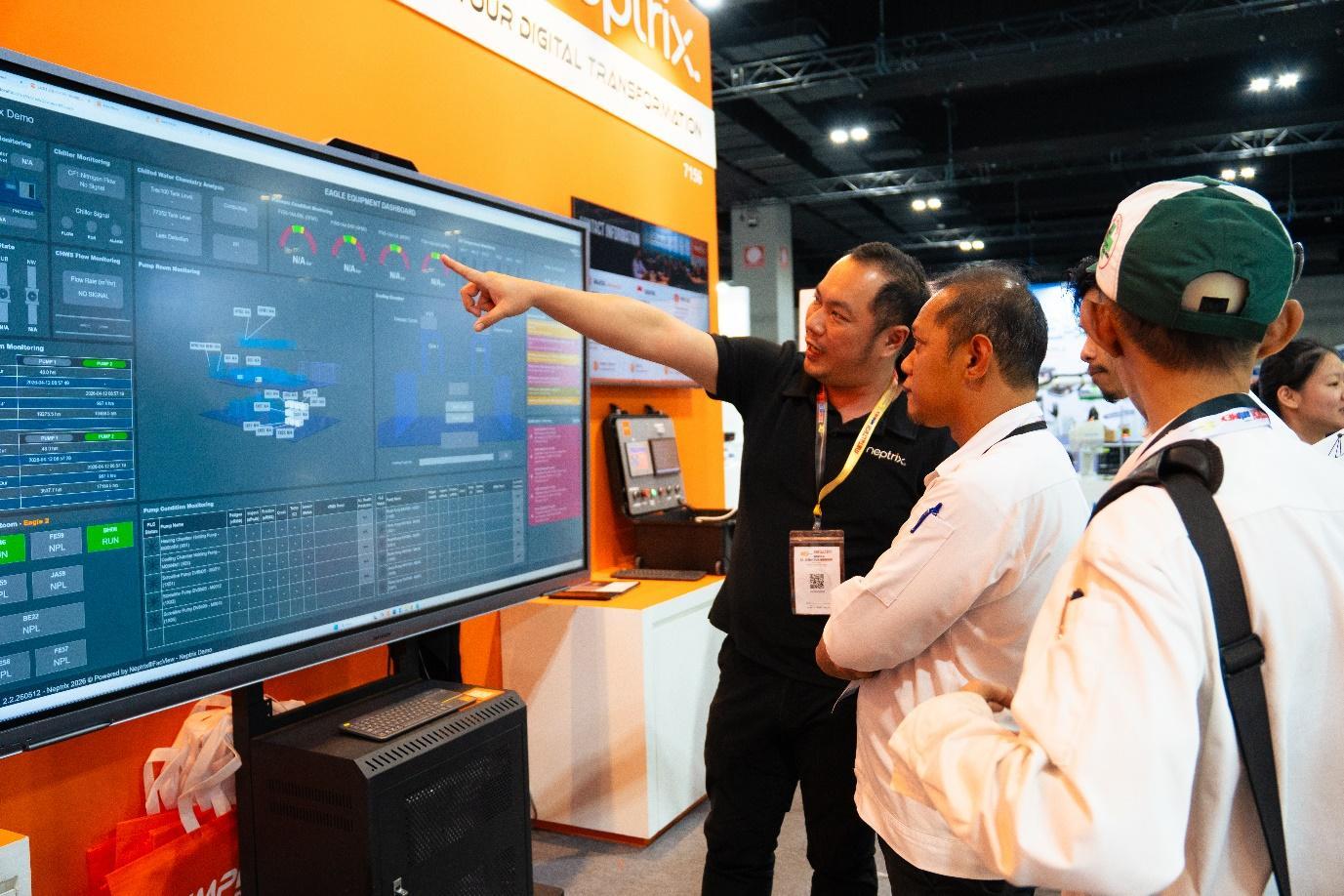
Your line goes down at 2am. By the time your shift manager pieces together what happened, four hours of production are already gone.
The machine didn't fail without warning. You just couldn't see it. Neither could the technician who walked past that motor three times that shift.
The Productivity Trap Most Factories Can't See Their Way Out Of
Here's something most plant managers won't say out loud but quietly know to be true: the easy wins are gone.
Scheduling has been tightened. Headcount is optimised. Inventory is leaner than it's ever been. If your operation has been running for more than a decade, someone has already looked hard at every process a consultant can put on a slide and squeezed it. Yet the productivity numbers still plateau. Downtime still happens. Yield still leaks. And every post-mortem points to a different cause.
The problem isn't your people. It isn't your process design. It's that the inefficiency left in your operation is no longer visible using the tools you have.
The losses that remain are buried in machine behavior: brief, repeated events that never trip an alarm and never appear in a morning report. Individually invisible. Collectively significant.
10–15%
BCG estimates that Industry 4.0 adoption can unlock efficiency gains of 10 to 15 percent in the short term.[1]
And here's the harder truth: The data describing all of it already exists.
Your machines are generating sensor readings, cycle logs, temperature curves, and vibration signatures constantly. Most of it goes unread. The rest lands in a report long after the window to act has closed.
This is what's known as dark data — not missing data, but data that exists and does nothing. It's the gap between the factory floor your team thinks they're managing and the one that's actually running.
Closing that gap isn't a productivity initiative. It's a visibility problem. And it's one manufacturers are now solving in weeks, not years.
What Data Visibility Actually Means on a Factory Floor
Let's be precise about what we mean, because "data visibility" gets thrown around like it solves itself.
Data visibility isn't a dashboard. It isn't a weekly Overall Equipment Effectiveness (OEE) report or a shift summary reviewed at handover. In operational terms, it means one thing. Knowing what every critical asset is doing right now, seeing the moment behavior deviates from normal, and getting that signal to the right person before a problem becomes a failure. Not fast enough for next week's review meeting. Fast enough to matter.
That's a much higher bar than most factories are currently meeting.
These breakdowns tend to show up in a few different ways.
No instrumentation
Machines that have been running reliably for 15 or 20 years with no vibration sensor on the motor, no temperature monitoring on the bearing housing. The data doesn't exist because nobody ever created the means to collect it.
Fragmentation
ERP in one system, MES in another, machine logs somewhere else entirely. Data collected from these systems is often left untouched on hard disks — rarely surfaced, rarely connected, rarely turned into anything useful. A technician who wants the full picture ends up stitching it together manually, usually after something has already gone wrong.
No defined threshold
Even where the data exists and is accessible, it still doesn't always trigger action, because nobody ever defined what the threshold was or built the workflow for what happens when a reading goes amber. The signal is there. Nobody is watching it.
This is the gap that a unified operational dashboard closes: pulling every data source into a single view, in real time, so that deviations are visible the moment they occur, not hours later in a report.
Here's a concrete example of why this matters.
Consider a conveyor motor running above its established temperature baseline. It won't trigger an alarm. It's not in a critical range. It looks fine. But a measurable temperature rise above baseline is a well-documented early indicator of bearing wear.[2] In a fragmented environment, that reading sits in a machine log nobody checks. Left unaddressed, that bearing fails. That conveyor stops. You're looking at a four-hour unplanned stoppage, an emergency maintenance call, and a production shortfall that someone has to explain on Monday morning. In a connected environment, where every data source feeds into a single operational dashboard, that deviation surfaces the moment it appears. That's what Neptrix FacView is built to deliver: all the data that matters, visible in one place, in real time.
Visibility means seeing the deviation. Not the failure.
That's the difference between a factory that reacts and one that predicts. And it starts long before any AI enters the conversation.
Why IoT Alone Doesn't Solve the Problem — and Where AI Changes the Equation
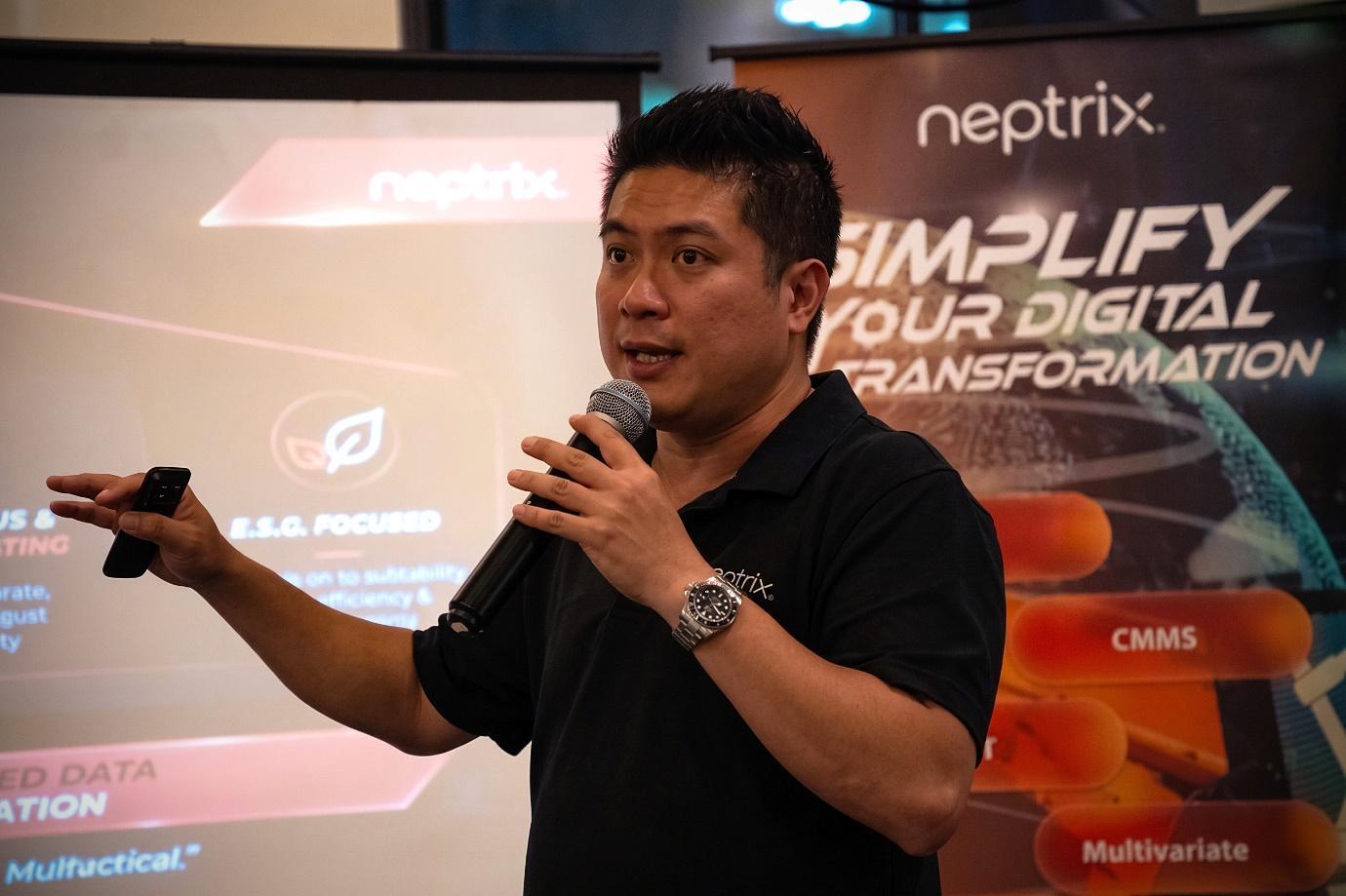
For many manufacturers, the move to IoT is still ahead of them. And the factories that have made it first are learning a hard lesson: connectivity without a clear strategy for what to do with the data simply creates a faster way to be overwhelmed by it.
Here's what happens in practice. You instrument a production line. Sensors go on the motors, the conveyors, the compressors. Data starts flowing. Within a week you have hundreds of sensor streams generating thousands of readings per minute. Within a month you have more data than your team has ever had access to and absolutely no reliable way to determine which of those readings actually matters right now.
You haven't solved the visibility problem. You've replaced one problem with another.
This is sensor sprawl. It's common, it's expensive, and it's the reason a lot of IoT pilots stall before they reach scale. The hardware works. The data is there.
This is precisely where AI earns its place in the architecture.
Basic alarm systems are built around fixed thresholds. AI-based monitoring, like the models Neptrix deploys, is designed to go further: recognising patterns across dynamic baselines, across multiple machines simultaneously, across variables that no human analyst would have time to correlate manually. A bearing temperature rising while vibration frequency shifts and motor current draw increases isn't three separate readings to a model trained to look for it; it's a single, recognisable failure signature. A static threshold alarm, by contrast, only ever sees three unrelated numbers.
The other thing AI does is prioritise. Not every anomaly is urgent. Not every deviation leads to failure. A well-configured AI layer separates the signal from the noise and tells your maintenance team what to look at first, ranked by predicted severity and time to failure. That's not a small operational improvement. That's the difference between a maintenance team that's always reactive and one that's working a structured, intelligence-driven schedule.
Put it together and the picture becomes clear. IoT is the nervous system that senses everything. AI is the interpretive layer that understands what the sensing means. Neither is sufficient alone.
The output of that combination isn't a dataset or a report. It's a notification on a technician's phone well before a predicted failure, telling them exactly which asset to inspect and why. That's what operational visibility actually looks like when it's working.
The Four Places Where Poor Visibility Is Costing You Right Now
Poor visibility isn't an abstract problem. It has specific addresses inside your operation and most of them are already showing up somewhere in your P&L. Lean Manufacturing's seven wastes framework — Waiting, Defects, Overproduction, Overprocessing, Transport, Inventory, and Motion — gives operations teams a structured lens for identifying where value is being lost. Four of these consistently surface as the most measurable and data-solvable losses on the factory floor, and they are exactly the areas Neptrix's analytics are built to address.
01 — The Waiting Waste
Unplanned Downtime
Every unplanned stoppage has a history. A vibration pattern that shifted three days earlier. A temperature that climbed gradually over a week. A cycle time that started adding milliseconds per hour before it added minutes. The failure didn't arrive without warning. The warning just wasn't visible to anyone in time to act on it.
This is the most measurable cost in the building. You know exactly how long the line was down. You know what it cost per hour. What you often don't know is that it was preventable. Visibility doesn't eliminate maintenance. It converts unplanned maintenance into scheduled maintenance — and that shift from reactive to scheduled changes everything about how your operation runs.
75%
less unplanned equipment downtime
~90%
better spare parts management efficiency
A collaboration between A*STAR, Pratt & Whitney Singapore, and local technology startups (unrelated to Neptrix) deploying AI-powered Connected Factory Analytics — a result later highlighted at the Singapore Aerospace Technology Leadership Forum 2026.[4]
And downtime rarely arrives alone. The same process that fails to catch an equipment deviation often fails to catch a quality deviation either.
02 — Throughput
Yield Loss
Yield loss is straightforward: The line makes fewer parts than it is built to make, say 80 in an hour instead of 100. It rarely looks like a problem because nothing breaks and nothing hits the scrap bin; it leaks out in slightly slow cycles and short stops that never make it into a report. Left unmeasured, those small losses add up to real capacity you have already paid for but never get back. Neptrix closes that gap by tracking every cycle against the line's normal rate in real time, so the moment output starts to slip it shows up on the floor, not in next month's numbers.
03 — The Defects Waste
Quality Loss
Quality loss is a separate problem, and the classic defects waste: the parts get made, but some are not good enough to sell and end up scrapped, reworked, or returned by the customer at far higher cost. It usually escapes because quality is only spot-checked, so any drift between checks ships before anyone catches it. The warning signs are almost always there first — small shifts in temperature, pressure, or dimensions that appear well before a part turns into a reject. Neptrix watches those signals continuously and flags them at the source, so a bad run is caught within minutes instead of after hours of output. And the same missing visibility drives a third loss that never shows up in what you ship, only in what you spend to run the line.
04 — Beyond the Classic Seven
Energy Waste
Though not part of the original TIMWOOD framework, energy waste is increasingly recognised in Industry 4.0 lean practice as a measurable and preventable loss — one that only becomes visible with continuous instrumentation.
This is the cost centre most operations teams underestimate. AI-driven energy monitoring regularly surfaces significant savings in facilities that already believed their energy consumption was under control.
Motors running at full load during low-demand periods. Compressed air leaks that have been present for months. HVAC systems cycling through non-production hours because nobody automated the schedule. None of it malicious. None of it visible without the right instrumentation layer watching continuously.
The pattern across all three wastes is identical: the cost is real, the cause is traceable, and the data needed to prevent it either doesn't exist or isn't connected. That's a visibility problem. And it's solvable. Neptrix surfaces all three — downtime, quality, and energy — through a single connected dashboard, giving operations teams the visibility to act on each before it compounds.
How to Start Without Ripping Out Your Existing Infrastructure
The most common reason IoT+AI visibility projects don't start is an assumption that they can't be completed without a full infrastructure overhaul, a major capital commitment, and six months of disruption to a production environment nobody wants to touch.
That assumption is wrong. And it's costing factories time they don't have.
Modern IoT deployments are designed specifically to work alongside legacy equipment, not replace it. A vibration sensor bolts onto a 20-year-old motor without touching it. A vision system mounts above an existing conveyor without a single modification. A current clamp goes around unchanged switchgear cabling in under an hour. The equipment you've been running reliably for decades stays exactly where it is. You're adding a layer of sensing — not rebuilding the floor.
Start smaller than feels ambitious.
Pick one production line. Pick one problem that already has a cost attached to it. A recurring asset failure. A chronic yield loss at one production stage. A piece of equipment whose downtime you can quote from memory. Instrument that problem. Establish a baseline. Run it for 90 days and measure what changes.
That's your minimum viable visibility project. Not a digital transformation. Not a platform rollout. One problem, one line, one quarter. Prove the value at small scale before you ask anyone to approve large scale.
But here's what most technology vendors won't tell you.
The technical deployment is actually the easier half. The harder half is organizational. Visibility data only creates value if someone owns the response. When the AI flags an anomaly at 3am, who gets the notification? What are they expected to do with it? What's the escalation path if they don't act? In most factories, that person is a maintenance technician or a shift supervisor on the floor, not someone at a laptop in the office. The system has to reach them, in a format they can act on, at the moment it matters.
Without answers to those questions, you haven't built a visibility system. You've built a more expensive version of the dashboard nobody checks.
Define the workflow before you deploy the hardware. The technology will work. Make sure your process is ready to work with it.
The factories pulling ahead right now aren't running newer machines. They're running the same equipment with one critical difference: they can see what's happening inside it. That's not a technology advantage. It's a visibility advantage. And it's available to you right now.
The Question Worth Sitting With
What's the one failure your operation keeps absorbing that you already suspect has a pattern nobody's been able to see yet?
If you already know the answer, it's worth a conversation. Book a free demo to see exactly what your factory floor has been trying to tell you.
In Summary
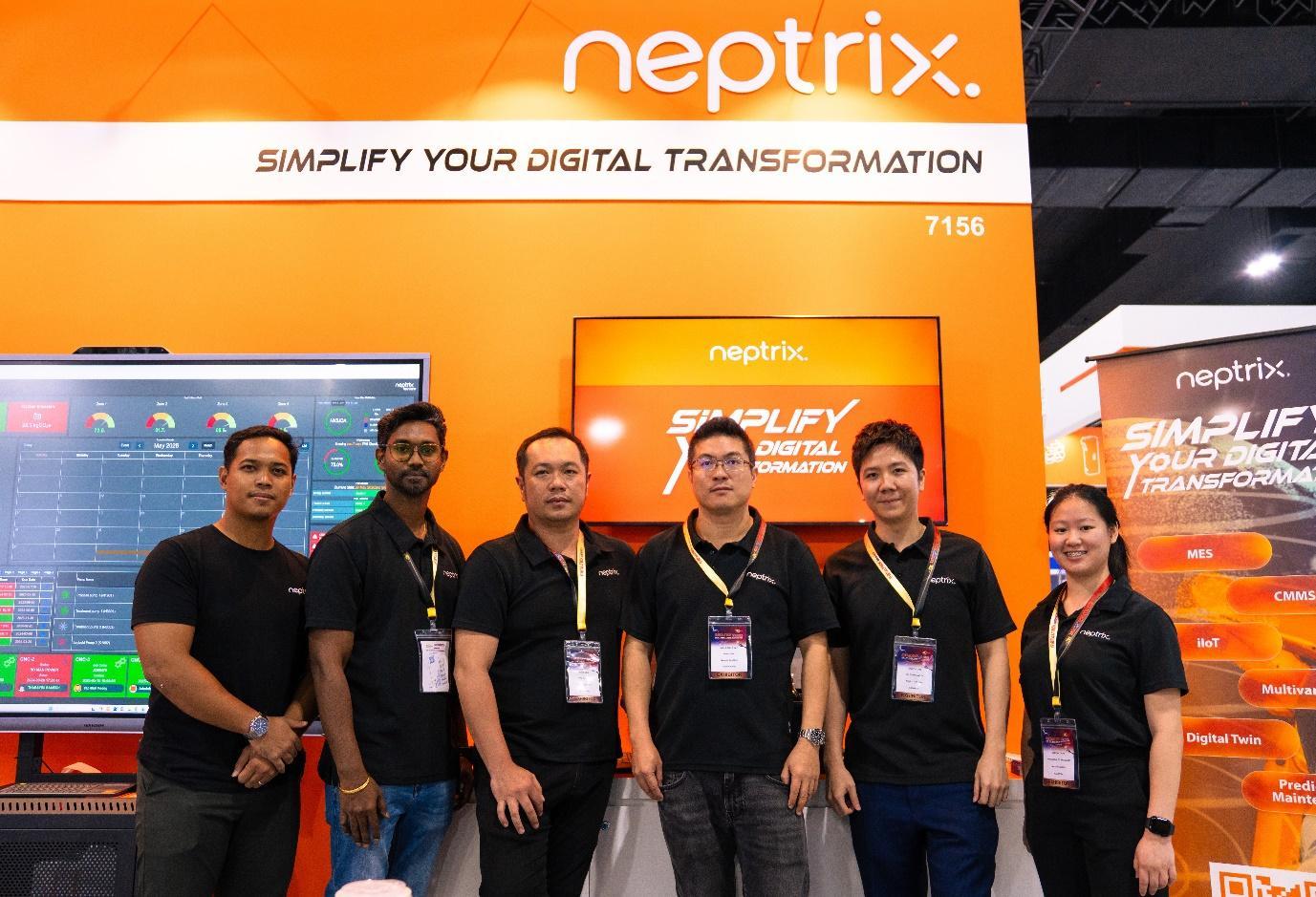
Across conversations with manufacturers at Metaltech & Automex 2026, one theme emerged consistently: the challenge is no longer collecting data from machines. It is converting that data into operational intelligence that teams can act on.
What differentiates Neptrix is its practical approach to Industrial AI adoption. Rather than requiring manufacturers to replace existing infrastructure, Neptrix connects, contextualises, and operationalises data that already exists within the factory environment.
As manufacturers progress on their Industry 4.0 journey, operational visibility is proving to be the most important foundation to establish before automation, analytics, and AI can deliver meaningful business outcomes. The ability to see what is happening on the factory floor, in real time, is not the end goal. It is the prerequisite for everything else.
Company Overview

Neptrix Sdn Bhd
AI, IoT & Smart Manufacturing · Malaysia
- Category
- AI, IoT & Smart Manufacturing
- Core Focus
- AI, IoT, MES, CMMS, Digital Twins, Smart Factory Solutions
- Industries
- Aerospace, Advanced Assembly, Automotive, Electronics Manufacturing
- Technology Stack
- AI, IoT, Advanced UI/UX, LLM, Predictive Model
- Headquarters
- Malaysia
- Contact
- neptrix.com·sales@neptrix.com


Tech Unboxing is an editorial series spotlighting companies shaping the future of technology, exploring who they are, what they build, and why it matters. It is produced by MyInnovationX (MYX) in collaboration with Horizen Media. Each edition features different innovative technology companies, solutions, and use cases that are shaping the future of industries across ASEAN.
Sources
- Boston Consulting Group. "Industry 4.0." bcg.com
- Machinery Lubrication. "Detecting Bearing Failure." machinerylubrication.com
- Neptrix. Company website, product documentation, and deployment case studies. neptrix.com
- Ministry of Trade and Industry Singapore. Singapore Aerospace Technology Leadership Forum 2026. Referenced via "Beyond Predictive Analytics" (industry report, 2026).